
Tailored for your success
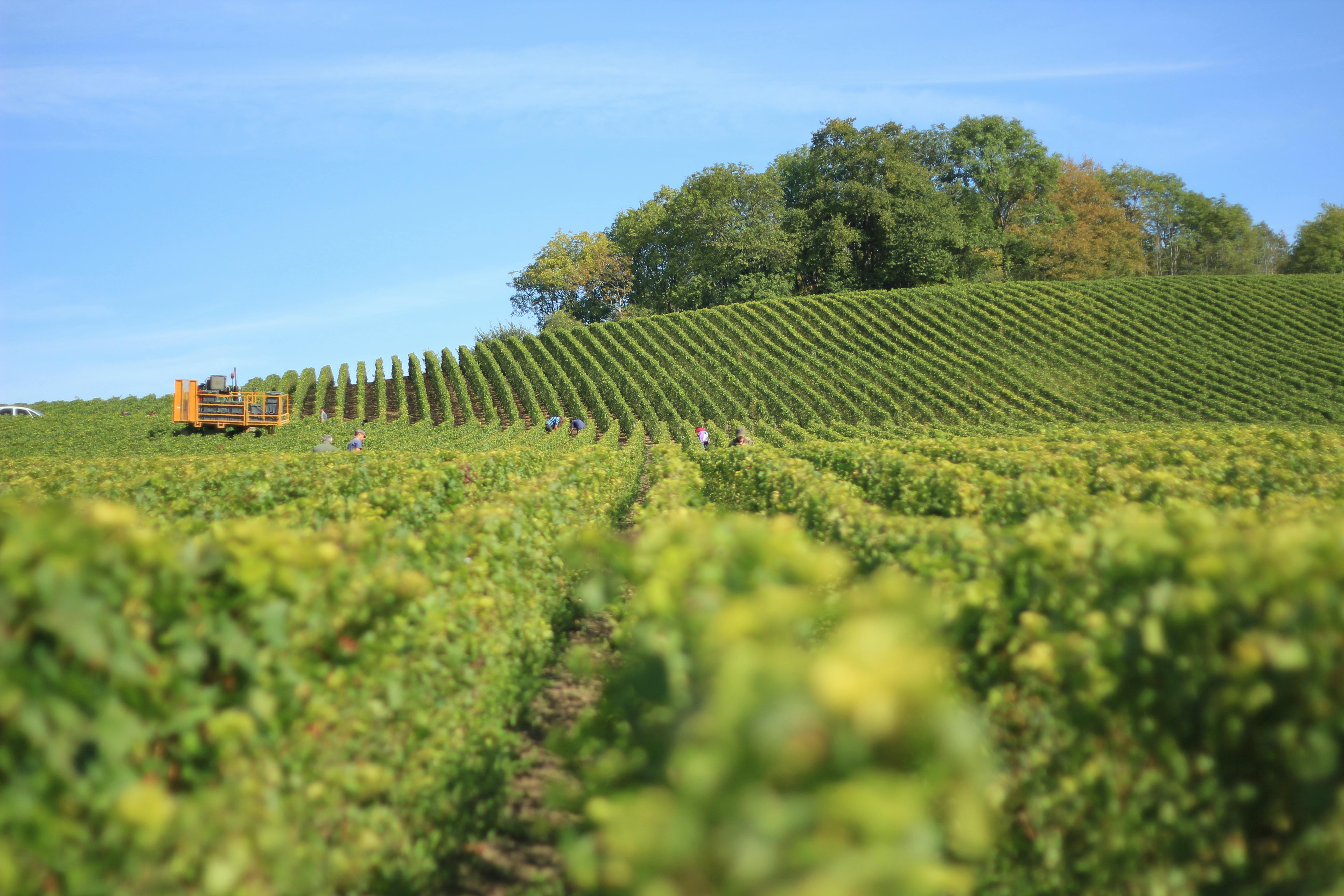
The year 2025 continues the recent trend: warmer than average, with regional extremes, but overall conditions that proved beneficial for grape quality.
- A mild and wet winter: Winter 2024–2025 recorded a thermal anomaly of +0.6 °C (≈
+1.1 °F), with February particularly warm at +1.2 °C (≈ +2.2 °F)
above normal. No prolonged cold waves were observed, confirming how rare
they have become in France. Rainfall was uneven: +30 to +40% above
normal from the northern Alps to the lower Rhône Valley, but 30%
below normal in Languedoc, Provence, and Corsica. Sunshine was
deficient in the Northwest (-20%), but normal or above average elsewhere.
- A hot and dry spring in the
north, unstable in the south: With an anomaly
of +1.1 °C (≈ +2.0 °F), spring 2025 ranks as the 3rd warmest
since 1900. North of the Loire River, maximum temperatures were often +2
to +3 °C (≈ +3.6 to +5.4 °F) above normal, with sunshine up by 20–30%.
In contrast, the south faced heavy rainfall (+45 to +80% in Provence and
Corsica) and several severe thunderstorms. Nationally, rainfall was 20% below normal.
- A scorching start to summer,
then unstable weather: A heatwave hit the
country from June 19 to July 4, with temperatures frequently above 95
°F, and southern regions nearing 104 °F. July then alternated
between hot and cool spells, averaging 22 °C (≈ 71.6 °F), or +0.9
°C (≈ +1.6 °F) above normal. Rainfall was 25–150% above normal in the
north and Languedoc due to storms, but 25–75% below normal in Provence and
Corsica.
These conditions, though challenging, accelerated the vine’s growth cycle and preserved an excellent sanitary state of the grapes thanks to low disease pressure. They explain the record precocity of the harvest and the high quality anticipated for the 2025 vintage.
- A mild and wet winter: Winter 2024–2025 recorded a thermal anomaly of +0.6 °C (≈
+1.1 °F), with February particularly warm at +1.2 °C (≈ +2.2 °F)
above normal. No prolonged cold waves were observed, confirming how rare
they have become in France. Rainfall was uneven: +30 to +40% above
normal from the northern Alps to the lower Rhône Valley, but 30%
below normal in Languedoc, Provence, and Corsica. Sunshine was
deficient in the Northwest (-20%), but normal or above average elsewhere.
Harvest 2025: Early and regionally contrasted
In 2025, the keyword is precocity. Where harvests once began in late September, they now start two to three weeks earlier on average. This year, several regions began as early as mid-August.
- Burgundy: Grapes for sparkling wines (crémants) were picked as early as
August 18, followed by whites around August 23–25 and reds by August
27–28. Clusters are smaller, reducing yields (sometimes -50%, with
some estates harvesting only half of 2024’s crop), but sugar concentration
and acidity are excellent. The August heatwave actually benefited
ripening. Around 40,000 harvest workers are mobilized, with more
students available thanks to the earlier start.
- Champagne: Harvest ran from August 20 to September 4, with a commercial
yield set at 9,000 kg/ha (down from 10,000 in 2024). Agronomic
yield is estimated at 10,000 kg/ha, allowing part of the harvest to be
stored for market regulation. Grapes are healthy, with stable ripeness.
Around 120,000 seasonal workers are involved, with better working
conditions than in past years.
- Beaujolais: Yields are down to 60% of 2024 levels, due to poor
flowering followed by an August heatwave. Yet quality is excellent: deeply
colored, full-bodied wines with balance and moderate alcohol levels
(around 13° compared to higher levels in recent vintages).
- Alsace: Sparkling wine grapes were picked as early as August 18–19,
about ten days ahead of 2024. Drought reduced cluster size, leading to an 11%
drop in production.
- Loire Valley: An increase of +26% compared
to 2024, with harvests starting as early as mid-August. However, despite
this growth, yields remain historically low and well below expectations.
The situation is also uneven, with some appellations such as Sancerre
recording a decline compared to the average of the past five years.Bordeaux:
Whites were harvested at the end of August, reds around September 10 — 10
to 15 days earlier than 40 years ago.
National production: A rebound in volume, quality in focus
France’s 2025 wine
production is estimated between 37.4 and 41 million hectoliters:
- - This represents a +3 to +14%
increase compared to 2024, though still -13% below the five-year
average.
- - Strong growth is expected in Burgundy
(+45%), Jura (tripled harvest after the 2024 frost), Champagne
(+12%), and Loire Valley (+26%).
- - Declines are expected in Alsace
(-11%), Languedoc-Roussillon (-5%) (due to heatwaves,
wildfires, and the uprooting of 10,000 ha), and Beaujolais, which
faces its smallest crop since 2012.
Vintage 2025: High hopes despite challenges
Although volumes
vary greatly between regions, the quality outlook for 2025 is excellent.
The dry summer concentrated aromas maintained a good sugar-acidity balance, and
limited vine diseases. Localized storms and drought reduced juice content but
enhanced density and typicity.
Across France,
optimism prevails: 2025 could join the ranks of recent great vintages,
especially in Bordeaux, Burgundy, and Champagne, while also showcasing how
French winegrowers are adapting to climate challenges.
At a glance (key figures):
- - Winter: +0.6 °C (≈ +1.1 °F) above normal, wetter in the northeast, drier in the south (-30%).
- - Spring: +1.1 °C (≈ +2.0 °F)
above normal, rainfall deficit in the north (-60%), surplus in the south
(+80%).
- - Summer: June–July heatwave, July
average 22 °C (≈ 71.6 °F), or +0.9 °C (≈ +1.6 °F) above
normal.
- - Harvest: 10–20 days earlier
than traditional dates.
- - National production: 37.4–41
million hl (+3 to +14% vs. 2024, -13% vs. 5-year average).
- - Burgundy: +45%,
Champagne: +12%, Loire Valley: +26%, Alsace: -11%,
Languedoc: -5%.
This year’s harvest embodies both the challenges and resilience of French viticulture: lower volumes in some regions, but exceptional promise in terms of quality.


32 Rue Robert Mallet Stevens
BAT C
30900 Nîmes - FRANCE
+33 (0)4.66.23.44.22