
Tailored for your success
Chardonnay
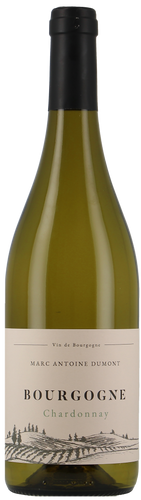
Marc Antoine Dumont - Bourgogne Chardonnay
White,Bourgogne Chardonnay
Chardonnay
history
Founded on a deep respect for Burgundian heritage, the Marc Antoine Dumont estate embodies a philosophy centered on authenticity and precision. Driven by a passion for the region's terroirs, the house crafts wines that favor elegance, balance, and pure fruit expression, honoring generations of winemaking tradition while embracing contemporary precision.
Vineyard
The vines are planted on classic Burgundian clay-limestone soils along gentle slopes that offer ideal sunlight exposure while maintaining cool night temperatures to protect freshness. The vineyard averages around thirty years of age and is managed through sustainable viticulture to let the terroir express itself freely.
Winemaking
Harvesting takes place at optimum aromatic ripeness, after which whole bunches undergo gentle pneumatic pressing and a cold settling phase. Fermentation occurs under strict temperature control, followed by eight to ten months of aging on fine lees mostly in stainless steel tanks to emphasize fruit purity, complemented by a subtle proportion in seasoned French oak barrels with light lees stirring for roundness.
Tasting notes
On the palate, a crisp and energetic entry leads into a rounded mid-palate supported by juicy acidity, finishing clean, salivating, and pleasantly mineral.
Food pairing
This wine pairs naturally with fresh oysters, chilled shellfish platters, pan-seared sea bass, roasted poultry seasoned with tarragon, warm cheese gougères, as well as fresh goat cheeses like Crottin de Chavignol.
Aging potential
This vintage will show its best fruit profile between 2025 and 2028, offering an aging window of three to five years, and should be served chilled at a temperature between 10°C and 12°C.
Grape varieties
Chardonnay
Cuvée France
32 Rue Robert Mallet Stevens
BAT C
30900 Nîmes - FRANCE
+33 (0)4.66.23.44.22
32 Rue Robert Mallet Stevens
BAT C
30900 Nîmes - FRANCE
+33 (0)4.66.23.44.22
GOVERNMENT WARNING : (1) According to the Surgeon General, women should not drink alcoholic beverages during pregnancy because of the risk of birth defects. (2) Consumption of alcoholic beverages impairs your ability to drive a car or operate machinery, and may cause health problems